
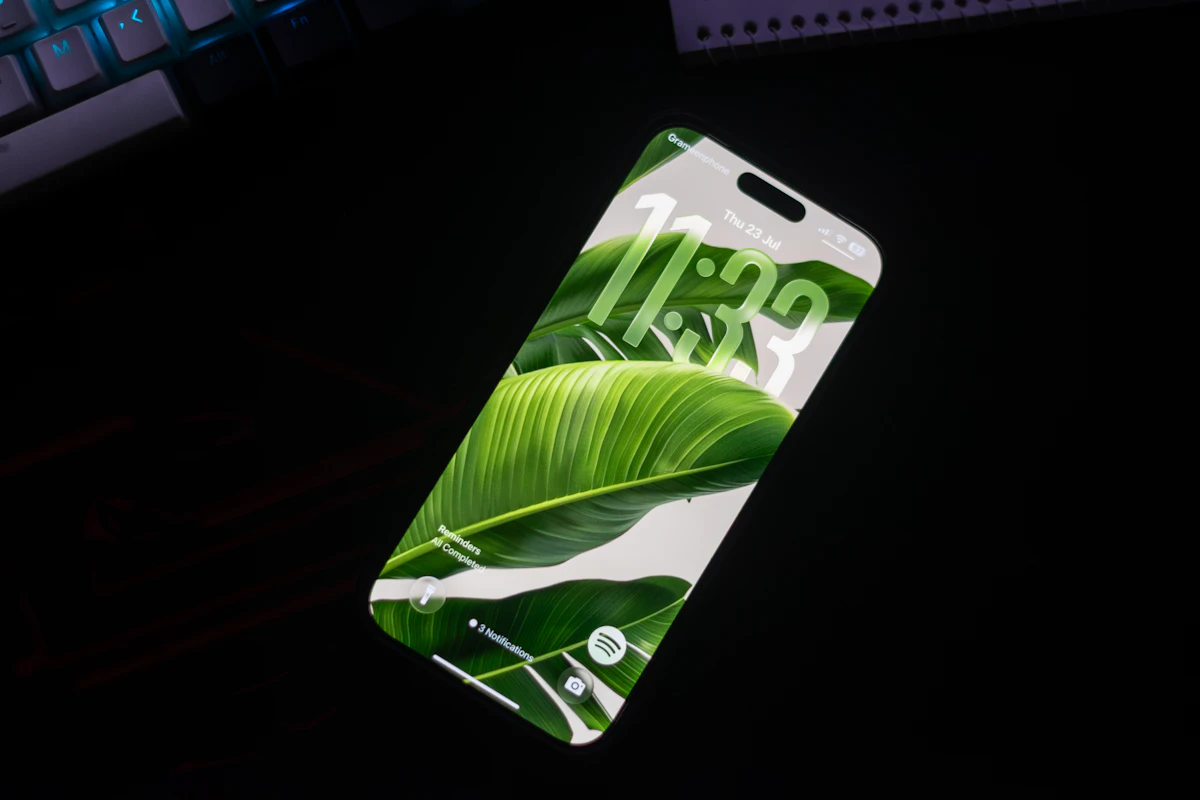
Apple Class Action Lawsuit (November 2026): $250M Siri Settlement Claims Due Dec. 21 and Other Apple Cases
The Apple class action lawsuit that pays money right now is Landsheft v. Apple, a $250 million settlement over Siri and Apple Intelligence features that iPhone buyers say were advertised before they existed. Every other Apple case in the news is closed, still in court, or not a consumer case. This guide sorts them out, shows who qualifies, what a check could be worth and what to do before December 21, 2026.
Yes, one Apple settlement is open for claims. If you bought an iPhone 15 Pro, iPhone 15 Pro Max or any iPhone 16 model in the United States between June 10, 2024 and March 29, 2025, you can file a claim by December 21, 2026. Payments start at $25 per eligible iPhone and can rise to a $95 maximum or fall, depending on how many valid claims arrive. Doing nothing means no money.
Apple Siri settlement key facts
| Case | Landsheft, et al. v. Apple Inc., No. 5:25-cv-02668-NW (consolidated action), U.S. District Court, Northern District of California, San Jose |
|---|---|
| Judge | Noël Wise |
| Settlement fund | $250 million, a nonreversionary cash fund. Fees, costs and administration are paid from it. |
| Payment per device | Presumptive $25 per eligible device, adjusted up or down pro rata, capped at $95 |
| Who is covered | U.S. residents who bought an iPhone 16, 16e, 16 Plus, 16 Pro, 16 Pro Max, 15 Pro or 15 Pro Max in the U.S., for purposes other than resale, from June 10, 2024 to March 29, 2025. About 37 million devices. |
| Claim, opt-out and objection deadline | December 21, 2026 |
| Final approval hearing | February 24, 2027, 9:00 a.m., San Jose |
| Settlement administrator | Verita Global, LLC |
| Official website | SmartphoneAISettlement.com (type it in yourself rather than clicking a link in a message) |
| Administrator contact | 1-888-988-8945, or Landsheft, et al. v. Apple Inc., Settlement Administrator, P.O. Box 301132, Los Angeles, CA 90030-1132 |
| Class counsel | Clarkson Law Firm, Cotchett, Pitre & McCarthy, and Kaplan Fox & Kilsheimer |
| Status | Preliminary approval July 17, 2026. Claims open since September 21, 2026. No payments yet. |
| Apple’s position | Apple denies wrongdoing |
Which Apple class action lawsuit pays money today?
There is no single Apple lawsuit. Apple is a defendant in several unrelated matters, and only one of them has an open claim form. Start with this table, then jump to the section that fits your question.
| Case | What it is about | Status (Nov 16, 2026) | Money to claim? |
|---|---|---|---|
| Landsheft v. Apple | Siri and Apple Intelligence features advertised for the iPhone 15 Pro and iPhone 16 lineup | $250M settlement, preliminary approval granted, claims open until December 21, 2026 | Yes |
| Lopez v. Apple | Claim that Siri recorded private conversations without a wake word | $95M settlement. The claim deadline was July 2, 2025 and payments began January 23, 2026. | No, closed |
| In re Apple Inc. Device Performance Litigation | Slowing older iPhones through software updates | Settled for $310M to $500M. The claim deadline passed in 2020. | No, closed |
| Tabak v. Apple | Audio defect in the iPhone 7 and iPhone 7 Plus | $35M settlement. The claim deadline was July 3, 2024. | No, closed |
| United States v. Apple | Justice Department smartphone monopoly case, filed March 21, 2024 | Pending in federal court in New Jersey | No, government case |
| App Store consumer case (Pepper) | Whether Apple’s App Store rules raised app prices | Class decertified in October 2025. Ninth Circuit appeal pending. | No class payout |
| Affinity Credit Union v. Apple | Apple Pay fees charged to banks and credit unions | Class of card issuers certified September 23, 2026 | Not for consumers |
| Doe v. Apple (Illinois Photos case) | Face grouping in the Photos app under Illinois’ biometric privacy law | Class of Illinois residents certified June 5, 2026. No settlement. | No |
| Taction v. Apple | Patent case over haptic technology | $5.7 billion jury verdict on September 25, 2026. Apple says it will appeal. | No, paid to a patent holder |
Shareholder lawsuits over Apple’s Siri statements are also separate. Counsel for the iPhone buyers said the $250 million deal does not resolve securities class actions or derivative suits, and investors have nothing to claim in the consumer settlement.
The $250 million Siri settlement explained
Apple introduced Apple Intelligence and a more personal version of Siri alongside the iPhone 16 in 2024. The first complaint in this case was filed in March 2025. The plaintiffs say Apple advertised enhanced Siri capabilities that, in the words of the court filing quoted by ABC News, did not exist or were materially misrepresented. They say buyers overpaid for phones because of it.
Apple disputes that. The settlement document says Apple maintains its ads were not misleading because it disclosed from the start that Apple Intelligence features would arrive over time, that it delivered more than 20 such features, and that people buy iPhones for many reasons. An Apple spokesperson told ABC the company settled claims “related to the availability of two additional features.” The settlement states it is not an admission of liability or wrongdoing, as CBS News also reported. Class counsel Ryan Clarkson told CBS the fund is the largest false advertising settlement in history, which is his characterization.
What the judge decided so far
- Preliminary approval: after a July 8, 2026 hearing, Judge Noël Wise granted preliminary approval on July 17, 2026. She found the deal fair, reasonable and adequate for the purpose of sending notice, not a final ruling.
- A split among plaintiffs: five named plaintiffs represented by Pomerantz LLP opposed preliminary approval on May 19, 2026. They argued the deal should divide buyers into subclasses because claims have different values. The judge disagreed, finding that the underlying value of the enhanced Siri features is the same across all eligible devices.
- Payment cap: the order requires the parties to report to the court before paying any claim above $95 and bars any payment before final approval. The judge noted the parties’ view that hitting the cap was a low probability given the notice plan.
- Fees not yet set: the court will not decide the amount of attorneys’ fees, costs or service awards until the final approval hearing.
Who qualifies for the Apple settlement?
The class is defined by device, date and place of purchase. The court order defines it as purchasers of the listed iPhone models who reside in the United States and bought the phone in the United States for purposes other than resale during the class period, June 10, 2024 to March 29, 2025. Apple, its officers and employees, and the judges on the case are excluded. The official site also says the person filing must be the original purchaser, according to CBS.
| Your situation | Qualifies? | Note |
|---|---|---|
| You bought an iPhone 16, 16e, 16 Plus, 16 Pro or 16 Pro Max in the U.S. between June 10, 2024 and March 29, 2025 | Yes, if you are the original purchaser | File one claim per phone by December 21, 2026 |
| You bought an iPhone 15 Pro or 15 Pro Max in that window | Yes, if you are the original purchaser | Same deadline and rules |
| You bought a base iPhone 15 or iPhone 15 Plus | No | Those models are not on the list |
| You bought an eligible model after March 29, 2025 | No | Outside the class period |
| You bought the phone outside the U.S. or live outside the U.S. | No | The class requires U.S. residence and a U.S. purchase |
| You received the phone as a gift, or bought it used | Unclear | The site says original purchaser. Call the administrator before you file. |
| A business bought iPhones for its staff | Possibly | A separate business claim path is reported but not confirmed. The class covers purchases for purposes other than resale, so call the administrator before filing |
| You bought phones to resell them | No | Purchases for resale are excluded |
Whether the Apple class action lawsuit applies to you comes down to the model and the purchase date, not whether you were unhappy with Siri. If the phone was bought during the window, you are in the class even if you never received a notice.
How much each iPhone could pay
The settlement sets a presumptive payment of $25 per eligible device, with a cap of $95, as the judge’s order quotes it. The final number is not known until all claims are checked. The rule works like a pie: the money left after fees and costs is divided by the number of valid device claims, up to the cap.
The $250 million is the gross fund. Attorneys’ fees, service awards to the named plaintiffs, notice costs and administration all come out of it, and the court has not set those amounts. Because the eligible devices total about 37 million, the fund spread across every device would be about $6.76 each before fees. In practice only a share of owners file, which is why the check can land above $25.
The table below is an illustration, not a forecast. It assumes $100 million of net money, an invented round number, to show how the claim rate moves the check.
| Devices claimed | Share of about 37 million devices | Payment per device from $100 million |
|---|---|---|
| 1,000,000 | 2.7% | $95 (the cap; the formula alone would give $100) |
| 2,000,000 | 5.4% | $50 |
| 4,000,000 | 10.8% | $25 |
| 10,000,000 | 27.0% | $10 |
For scale, the earlier $95 million Siri recordings settlement capped payments at $20 per device, and some multi-device claimants reported receiving as little as $8 per device (reported, not confirmed as an average). That is a different case with a different class, so treat it as context, not a prediction. Anyone quoting you a fixed amount for the new settlement is guessing. If you want the basics of how pro rata payouts work, see our guide to how a class action lawsuit works.
How to file a claim
- Go to the official site. Type SmartphoneAISettlement.com into your browser. Filing is free.
- Start the claim. If you received an email or postcard with a Claim ID and PIN, entering them pre-fills the form. People who did not get a notice can file without one, according to news coverage of the site.
- Enter your details. The form asks for your name, address and phone number, plus the iPhone’s serial number, which CBS says you can find in the phone’s Settings. On current iOS versions that is usually under General, then About.
- Confirm the purchase. Expect to confirm that you bought the phone in the U.S. during the class period and that you expected certain Siri features you did not get.
- Pick how you want to be paid. CBS lists PayPal, Venmo, direct deposit or check.
- Repeat for each phone. The settlement allows one cash payment per eligible device, so each phone needs its own claim form.
- Keep your confirmation. Save the confirmation page or email and your serial numbers.
You can also print the paper claim form and mail it to the administrator with a postmark by December 21, 2026, at the P.O. Box listed in the facts table. After the claim deadline the administrator has ten calendar days under the court’s schedule to finish validating claims.
Claim, opt out or object?
You have three choices, and all three share the same December 21, 2026 deadline. The first two are mutually exclusive.
| Choice | What happens | What you give up |
|---|---|---|
| File a claim | You may receive a payment after final approval | You are bound by the settlement and release these claims against Apple |
| Do nothing | No payment | You are still bound by the settlement and its release |
| Opt out | You are not bound and keep your right to sue Apple on these claims | No settlement money. Someone who submits an exclusion request and a claim form gets no payment. |
| Object | You tell the court in writing why the deal is unfair | You stay in the class and are still bound if the court approves. You can appear at the hearing only if you objected in writing. |
An opt-out must be an individual written request, mailed with a postmark by the deadline or emailed to the administrator. It must include your name, address, email and signature, the case name and number (Landsheft, et al. v. Apple Inc., Case No. 5:25-cv-02668, N.D. Cal.) and a clear statement that you want to be excluded. Group opt-outs are not allowed. An objection must be in writing, filed through the court’s electronic system or mailed with a postmark by the deadline to the federal courthouse in San Jose, and it must give the grounds, show you are a class member and list any objections you or your lawyer filed in the past five years. A licensed attorney in your state can explain what giving up your right to sue means for you.
Apple Siri settlement timeline
- June 10, 2024The class period begins for the eligible iPhone models.
- March 19, 2025Peter Landsheft files the first complaint in the Northern District of California.
- March 29, 2025The class period ends.
- May 5, 2026Plaintiffs file the $250 million settlement agreement and ask for preliminary approval.
- May 19, 2026Five named plaintiffs oppose preliminary approval and argue for subclasses.
- July 8, 2026The court hears the motion for preliminary approval.
- July 17, 2026Judge Wise grants preliminary approval and sets the final hearing for September 29, 2027.
- August 13, 2026The court advances the final approval hearing to February 24, 2027.
- September 21, 2026Claims open, according to the settlement site as reported by CBS and others.
- December 21, 2026Last day to file a claim, opt out or object.
- February 24, 2027Final approval hearing in San Jose.
- After final approvalPayments cannot begin until the court approves the deal. The court schedule lists claim payments 60 calendar days after the settlement’s effective date.
Other Apple lawsuits with nothing to claim
Apple’s quarterly report for the period ended June 27, 2026, filed with the SEC, lists the Apple matters the company treats as significant. They are government and developer fights, not consumer payouts.
- Justice Department lawsuit. The DOJ and a group of state and district attorneys general sued Apple on March 21, 2024 in New Jersey, alleging monopolization in smartphone markets. The report says various civil suits in state and federal courts allege similar antitrust violations and seek money damages. A government lawsuit has no claim form, and we found no settlement in the private suits.
- Epic Games. The report says the Supreme Court granted Apple’s petition on June 30, 2026 to review the legal standard for civil contempt in the App Store dispute. This is a fight about app commissions, not a consumer class.
- European Union. The European Commission fined Apple 500 million euros on April 23, 2025 under the Digital Markets Act. Apple has appealed. It does not create U.S. claims.
- App Store consumer class. A federal judge decertified the class of Apple customers in October 2025, and the Ninth Circuit agreed to review that decision. Until the class is restored, nothing is payable.
- Apple Pay fees. The certified class in Affinity Credit Union v. Apple is made up of banks and credit unions that issued Apple Pay cards and paid Apple a fee. Consumers who use Apple Pay are not class members. Certification is a procedural step, not a finding that Apple broke the law.
- Photos app, Illinois. In Doe v. Apple, a federal judge in Illinois certified a class of Illinois residents in June 2026 over the Photos app’s People album. Plaintiffs estimate about 6.5 million people. There is no settlement, and any notice to class members must be approved by the court first.
- $5.7 billion patent verdict. A San Diego jury found on September 25, 2026 that Apple’s Taptic Engine infringed two Taction patents. The money would go to Taction, and the award is not final.
We found no consumer claim form for any of these. Other privacy and subscription cases are covered in our guides to the Gmail class action lawsuit and the Facebook settlement.
Apple settlement scam check
A notice sent to millions of iPhone owners is easy to copy. These warning signs are specific to this settlement.
- A link in a text or email that asks you to sign in with your Apple Account. The claim form asks for contact details and device information. It does not need your Apple password or a verification code.
- A fee to file. Filing is free. Class counsel’s fees are paid from the fund, subject to court approval.
- A lookalike website. The official site is SmartphoneAISettlement.com. Its File A Claim button has been reported to open the administrator’s claim portal on a separate address (aplsconnect.com). To be safe, start from the official address you typed yourself.
- “Unclaimed Siri money” or “join the Apple antitrust lawsuit.” The $95 million Lopez settlement closed to claims in 2025, and there is nothing to enroll in for the Justice Department case. Offers to release old Siri money or join an antitrust case for a fee are fraud.
- A promised fixed payout. No one can know your check until claims are counted and fees are approved.
- Calls to the court. Questions go to the administrator at 1-888-988-8945, not the clerk.
What happens next
Fee request. Class counsel’s motion for fees, expenses and service awards must be filed 35 days before the objection deadline under the court’s schedule, which falls in mid-November. The settlement website is required to post it. Watch it, because the fee amount affects the money left for claimants.
Final approval. On February 24, 2027 the judge decides whether to approve the settlement and rules on fees. She can approve it, ask for changes or reject it. If it is rejected, the preliminary approval order becomes void and the case returns to where it stood before the deal.
Payment timing. The court’s schedule lists claim payments 60 calendar days after the settlement’s effective date. If the judge approves on February 24 and nobody appeals, that would likely put payments in late spring 2027 at the earliest. That is our estimate, not an official date. An appeal could delay it, as CBS noted. Checks must be cashed within 120 days after they are sent, and reissue requests are due within 150 days.
Updates. We update this page when the court docket or the settlement site changes. For more on app and device cases, browse our Tech, Apps & Gaming settlement guides, including the Amazon Prime settlement and the Sony $7.85 million settlement claim.
Apple class action lawsuit FAQ
Is there an Apple class action lawsuit I can join right now?
Yes, one. The $250 million Landsheft v. Apple settlement over Siri and Apple Intelligence features is open for claims until December 21, 2026. The other Apple cases we reviewed are closed, still in court or not consumer cases.
How much will I get from the Apple settlement?
The starting point is $25 per eligible iPhone, adjusted pro rata up or down with a $95 cap. The final amount depends on how many valid claims are filed and on the fees the court awards.
Which iPhones are covered?
The iPhone 16, 16e, 16 Plus, 16 Pro, 16 Pro Max, 15 Pro and 15 Pro Max, bought in the U.S. between June 10, 2024 and March 29, 2025. The base iPhone 15 and iPhone 15 Plus are not on the list.
What is the Apple settlement deadline?
December 21, 2026 for claims, opt-outs and objections. Claims can be filed online or mailed with a postmark by that date.
When will the Apple Siri settlement be paid?
No payment can be made before the judge grants final approval, and the hearing is set for February 24, 2027. Under the court’s schedule, claims are paid 60 calendar days after the effective date, and an appeal could delay that.
What do I need to file a claim?
Your contact details and the iPhone’s serial number, which CBS says is in the phone’s Settings. The form also asks you to confirm the purchase details and choose a payment method.
Do I need a receipt?
The coverage we reviewed describes a serial number and purchase confirmation, not a receipt requirement. Keep your order confirmation or receipt anyway in case the administrator asks.
I have two eligible iPhones. Do I file twice?
Yes. The settlement allows one cash payment per eligible device, so each phone needs its own claim form.
I bought my iPhone used or got it as a gift. Can I claim?
The official site says the person filing must be the original purchaser. Call the administrator at 1-888-988-8945 before filing if your situation is different.
What if I do nothing?
You get no payment, and you are still bound by the settlement and give up the right to sue Apple over these claims. To keep that right, you must opt out by December 21, 2026.
Is the Siri settlement from January the same as this one?
No. The January 2026 payments came from Lopez v. Apple, a $95 million settlement over Siri recording conversations, which closed to claims on July 2, 2025. The new case is about Siri Apple Intelligence features on newer iPhones. You can be in both and must file separately.
Is the Apple settlement email real?
The settlement is run by the administrator, Verita Global, not Apple support. Type SmartphoneAISettlement.com yourself, and never enter your Apple Account password or a verification code to file a claim.
Can I get money from the Justice Department or App Store cases?
Not today. United States v. Apple is a government case with no consumer claim form, and the App Store consumer class was decertified in October 2025, with an appeal pending in the Ninth Circuit.
What is the $5.7 billion Apple verdict about?
It is a patent verdict. A San Diego jury found on September 25, 2026 that Apple owes Taction Technology more than $5.7 billion over haptic technology in the iPhone and Apple Watch. The money goes to Taction, not iPhone owners, and Apple says it will appeal.
Are Apple settlement payments taxable?
The settlement documents we reviewed give no tax guidance. Ask a tax professional about how a payment would be treated in your situation.
- Order Granting Preliminary Approval, Landsheft v. Apple Inc., No. 5:25-cv-02668-NW, ECF No. 94 (N.D. Cal. July 17, 2026)
- Order on Motion to Reset Final Approval Hearing Date, ECF No. 97 (N.D. Cal. August 13, 2026)
- CBS News: Apple settlement offers eligible iPhone owners up to $95 (September 22, 2026)
- ABC News: Apple’s $250 million class-action settlement paves way for payouts to iPhone owners (May 6, 2026)
- NBC 6 South Florida: Apple paying $95 million after lawsuit over unintended use of Siri (February 20, 2026)
- Apple Inc. Form 10-Q for the quarter ended June 27, 2026 (SEC)
- Official settlement website and administrator notice, Landsheft v. Apple Inc. (plain text, as described in the coverage above)
- Court orders and filings in Doe v. Apple Inc., No. 3:20-cv-00421 (S.D. Ill.) and Affinity Credit Union v. Apple Inc., No. 4:22-cv-04174 (N.D. Cal.) (plain text, court records)
- Reuters and CNBC reporting on the Taction Technology verdict, and Reuters reporting on the App Store class decertification (plain text)
What changed: November 16, 2026: first published.


3 Comments
Comments are closed.